When the judge is punished: America, the veto and the unravelling of international law
“When law becomes subordinate to power, justice becomes a privilege rather than a right”
GOA, India - There is something profoundly disturbing about the spectacle now unfolding before the world. The United States, which has for decades presented itself as the principal architect and defender of the rules-based international order, is increasingly behaving as though international rules are legitimate only when they serve American power.
When those rules inconvenience Washington or its closest allies, the language changes. Sovereignty is invoked. National security is invoked. American exceptionalism is invoked. And now, increasingly, sanctions are invoked against those who attempt to apply international law.
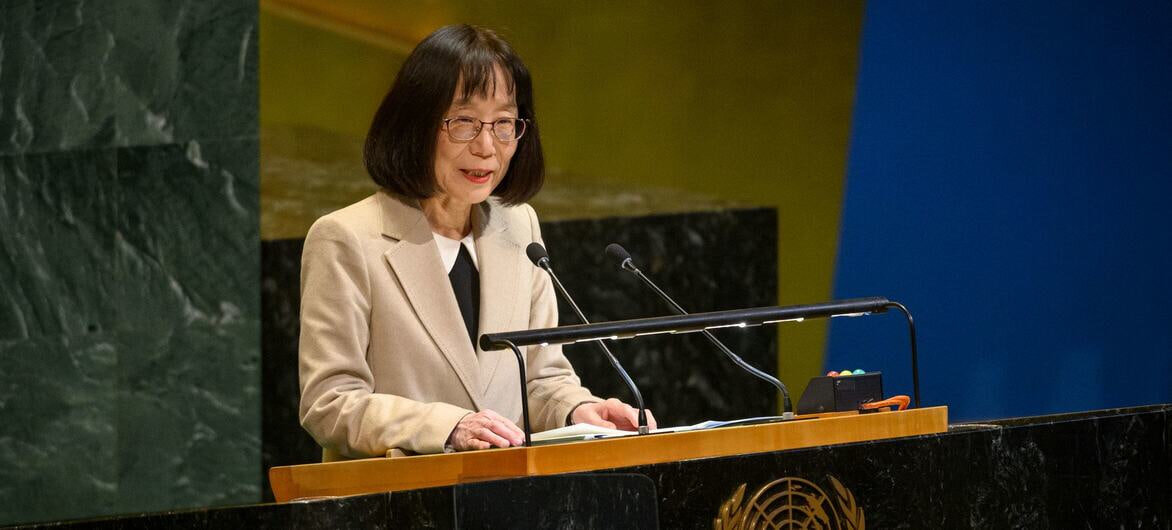
The latest assault is directed not merely at a foreign government but at the International Criminal Court itself. On August 18, 2026, the Trump administration slapped sanctions on ICC President Tomoko Akane and senior trial lawyer Abdoulaye Seye. The sanctions freeze assets within American jurisdiction and cut the targeted officials off from the US financial system.
The ICC has condemned the action as a flagrant attack on its independence. Japan, Akane's country, has described the sanctions as “very unfortunate”, while European governments have reaffirmed their support for the Court.
This is not an isolated act. It is the culmination of a long American hostility towards international institutions when they threaten to place American conduct or that of its allies under legal scrutiny. The United States signed the Rome Statute establishing the ICC in 2000 but never ratified it. In 2002, Washington formally notified the United Nations that it did not intend to become a party to the treaty. Under George W. Bush, the United States even sought guarantees protecting its nationals from ICC jurisdiction. Under Donald Trump in 2020, ICC personnel were subjected to sanctions.
President Biden subsequently revoked those sanctions, but his administration continued to oppose the Court's jurisdiction over the Palestinian situation. Trump returned to the offensive in February 2025 with an executive order authorising sanctions against ICC personnel.
What has changed now is the ferocity of the campaign. The United States is no longer merely refusing the jurisdiction of a court it never joined. It is attempting to intimidate the institution, punish its officials and encourage countries to abandon it.
Washington's hostility intensified after the ICC issued arrest warrants for Israeli Prime Minister Benjamin Netanyahu and former “Defence” Minister Yoav Gallant over alleged crimes connected with the Gaza war. The United States and Israel reject the Court's jurisdiction, but disagreement with a judicial decision is not a legitimate justification for attacking the judiciary itself.
This brings us to the deeper crisis: the gradual unhinging of the United Nations system itself.
The Security Council was born in 1945 out of a compromise among the victorious great powers. The veto was designed to ensure that the major powers would remain inside the system rather than walk away from it. But what may once have been a political compromise has become a structural instrument of impunity. Five countries retain the extraordinary ability to prevent the Council from taking substantive action, even when an overwhelming majority of the international community supports it.
The United States has not been alone in abusing this privilege. Russia has used it to protect its interests, China has employed it to shield allies and positions it considers vital, and Britain and France have historically exercised the veto in defence of their own geopolitical interests. The problem is therefore larger than American conduct. The problem is the architecture itself: a supposedly universal organisation in which five states remain constitutionally more equal than the other 188.
But America's use of the veto, particularly in relation to Palestine, has made the contradiction impossible to ignore.
During the Gaza war, Washington repeatedly blocked Security Council initiatives calling for ceasefires. On February 20, 2024, it vetoed an immediate ceasefire resolution despite overwhelming international support. In April 2024, it vetoed a resolution that would have opened the way for the General Assembly to consider Palestine's application for full UN membership, despite 12 of the 15 Security Council members voting in favour. On June 4, 2025, Washington again vetoed a resolution demanding an immediate, unconditional and permanent ceasefire in Gaza.
The consequences of such vetoes are not abstract. A veto in a diplomatic chamber can become a bomb falling on a hospital, a family denied food, a displaced population denied protection or a humanitarian agency denied access. International law becomes meaningless when its implementation can be suspended by the geopolitical preference of one powerful state.
The founders of the UN could not have anticipated the extent to which the veto would become an instrument of political paralysis. But the world has been warning about the problem for decades. The UN's own historical records document repeated concern about the way vetoes diminished the role of non-permanent members and damaged the credibility of the Council.
The General Assembly has attempted to respond. In April 2022, it adopted Resolution 76/262, establishing what became known as the “veto initiative”. Whenever a permanent member casts a veto, the General Assembly is to meet and debate the veto within a specified period. It was an important step towards accountability, but it does not remove the underlying problem. A veto can still kill a resolution before the General Assembly gets the opportunity to discuss its consequences.
That is not enough.
If the Security Council is repeatedly paralysed by the very states entrusted with maintaining international peace and security, the international community must ask a fundamental question: what purpose does the Council serve if its permanent members can disable it whenever their own interests are at stake?
The answer cannot be to abolish the United Nations. The world needs the UN more than ever. It needs a universal institution capable of mediating conflicts, organising humanitarian assistance, establishing international norms and giving smaller nations a diplomatic voice. What must be challenged is the undemocratic concentration of power within the Security Council.
The first reform must therefore be the abolition, or at the very least radical restriction, of the veto.
There should be no veto where genocide, crimes against humanity, war crimes or mass civilian atrocities are credibly alleged. A government should not be able to prevent the international community from responding to mass atrocities simply because it is one of five privileged members of an institution created 81 years ago.
If abolishing the veto altogether is politically impossible in the immediate future, states should establish a binding political convention that no permanent member will exercise it in cases involving mass atrocities. France and Mexico have already advocated restraint in the use of the veto in such circumstances. The proposal deserves to become an international norm rather than remain a diplomatic aspiration.
Second, the General Assembly must be given a much stronger role whenever the Security Council is paralysed. The historic “Uniting for Peace” mechanism, developed during the Korean War, offers a precedent. If the Council cannot act because of a veto, the Assembly should automatically assume a greater political responsibility. It should be empowered to recommend collective measures, establish investigative mechanisms and mobilise international humanitarian and diplomatic action.
Third, the composition of the Security Council must change. A Council designed in 1945 cannot claim democratic legitimacy in a world in which Africa has no permanent seat, India has no permanent seat and Latin America has no permanent seat. The distribution of political power must reflect the contemporary world rather than the geopolitical settlement at the end of the Second World War.
Fourth, international judicial institutions must be insulated from retaliation by powerful states.
The ICC is imperfect. It can be criticised. Its procedures can be debated. Its jurisdiction can be challenged through law. But a state that disagrees with a court does not acquire the right to sanction its judges. If Washington believes the ICC is exceeding its jurisdiction, it should make its case before the international community. If it believes the Rome Statute is defective, it should propose amendments. It should not attempt to destroy the institution because its investigations have become politically uncomfortable.
The danger is enormous. If the United States can punish ICC judges, another powerful state will inevitably claim the same right. Russia can punish investigators who examine Russian conduct. China can punish officials who investigate Chinese conduct. Israel can reject international judicial authority. Other governments will learn the same lesson: international law applies to the weak; power protects the strong.
That is the precise opposite of what the post-war international system was supposed to achieve.
There is also a profound irony here. Washington routinely invokes a “rules-based international order” when criticising Russia, China, Iran or other adversaries. Yet the legitimacy of rules cannot depend upon the identity of the accused. A rule that applies to one's adversary but not to oneself is not a rule. It is an instrument of power.
The ICC crisis therefore presents the world with a test far larger than the fate of two officials in The Hague. It asks whether international justice is going to remain genuinely international.
The answer should be unequivocal.
The countries that support the ICC must refuse to be intimidated. They should provide alternative banking and financial arrangements for sanctioned Court personnel, guarantee the independence of ICC operations, strengthen diplomatic support for the Court and reject American demands that they withdraw from the Rome Statute.
The European Union, Japan, Canada, Australia, African states and countries of Latin America should make clear that sanctions against judges cannot become an accepted instrument of international diplomacy.
The same principle must apply to the UN. The permanent members cannot be allowed to convert the veto from a safeguard of great-power participation into a licence for great-power impunity.
The world is approaching a dangerous crossroads. One path leads towards a genuinely multilateral system in which law is stronger than power. The other leads towards competing spheres of influence in which the powerful write the rules, interpret the rules and exempt themselves from the rules.
The United States is not destroying the international order alone. Russia, China and other powers have contributed to its erosion. But Washington occupies a special position because it has long claimed to be the guardian of that order. Its responsibility is therefore greater. When the self-proclaimed guardian begins attacking the institutions of international law, the damage is not merely national. It is systemic.
The United Nations cannot remain an organisation in which five governments possess a permanent political escape hatch. Nor can the ICC survive as a court that is expected to prosecute the crimes of the powerless while fearing retaliation from the powerful.
The international community must therefore reclaim the principle that sovereignty is not immunity and power is not innocence. The Security Council must be democratised, the veto must be radically curtailed, the General Assembly must be strengthened and international courts must be protected from political retaliation.
Otherwise, the world will have institutions that look international but function according to the hierarchy of power. And that would be the final humiliation of the UN: a world organisation reduced to asking permission from the powerful to enforce the law against them.
When the powerful can veto justice and then sanction the judges, the world does not have a rules-based order. It has a dictatorship of power wearing the robes of international law.
Leave a Comment